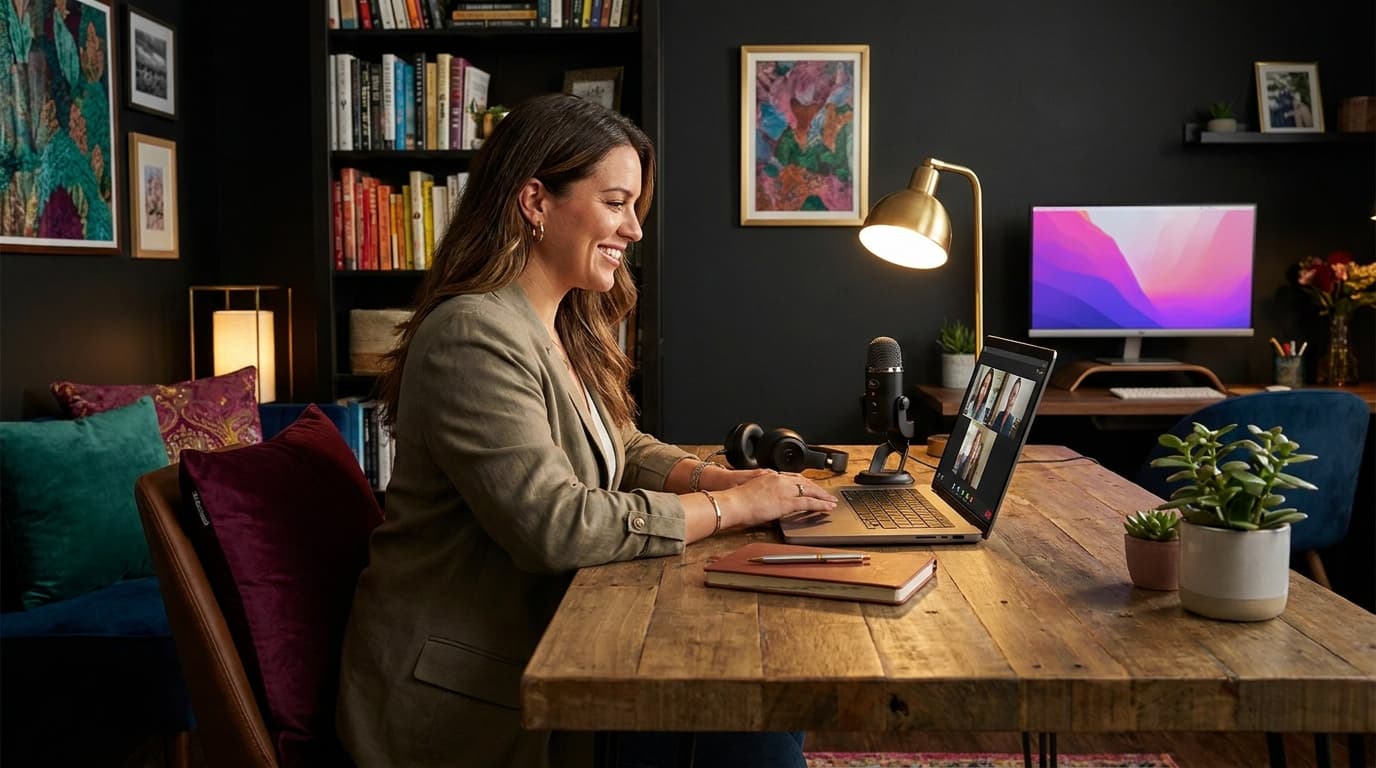
Jordan was a licensed life coach working part-time at a corporate wellness company in Toronto. She had 3 recurring coaching clients outside of work, but the coordination overhead — scheduling, invoicing, payment chasing — was eating into the time she could actually spend coaching.
The Problem with Traditional Coaching Platforms
She'd tried two other creator platforms before eZfan: one charged 30% commission, another required a monthly platform fee before any revenue came in. The economics didn't work at her volume. On eZfan, she keeps 80% from day one, with no monthly fee.
Month 1: Setup
Jordan set her call rate at $3/minute with a 20-minute minimum — so every session earned at least $60. She offered two types of sessions: single discovery calls and monthly coaching packages (12 sessions at a 10% discount, paid upfront via eZfan subscriptions).
Months 2–4: Building Credibility
Jordan started posting one 3-minute video per week on her eZfan feed: short coaching insights on topics like 'Why your morning routine isn't working' and 'The difference between goals and systems'. She used eZfan Reels to push these clips to the discovery feed. By month 3, she had 620 followers and 47 paying subscribers.
Month 6: Full Replacement
By month 6: $4,800/month from coaching packages, $860/month from her $15/month subscription tier, $320/month from PPV insight packs. Total: $5,980. Her corporate salary was $5,200/month net. She gave notice.
The Biggest Lesson
"Most coaches undersell themselves. I charged $3/minute because someone told me to start low. By month 4 I had a waitlist. I raised to $5/minute and the waitlist actually grew — because the new price positioned me as a specialist, not a commodity. Price is a signal."